Septic Tank Maintenance: How to Prevent Costly Septic Problems
A septic system is responsible for managing wastewater when a property is not connected to a municipal sewer system. When properly designed, installed, and maintained, a septic system can provide reliable wastewater treatment for many years.
But septic systems are not maintenance-free.
Without regular attention, solids can accumulate in the septic tank, drain fields can become overloaded or damaged, and problems can develop in the tank, pipes, pumps, or other components.
By the time wastewater starts backing up into a home, the underlying problem may already be significant.
Regular septic tank maintenance can help homeowners identify developing problems, protect the drain field, and reduce the risk of unexpected failures.
For properties throughout South Florida, understanding how to maintain a septic system—and knowing when to call a professional—can help protect both the property and the plumbing system.
What Is a Septic System?
A septic system is an onsite wastewater treatment system that collects, separates, and treats wastewater from a property.
A typical septic system may include:
- A septic tank
- Inlet and outlet pipes
- Baffles or other internal components
- A drain field
- Distribution piping
- A pump system, where applicable
- An alarm system, where applicable
Wastewater from toilets, sinks, showers, washing machines, and other plumbing fixtures flows into the septic tank.
Inside the tank, heavier solids settle toward the bottom while lighter materials float near the top. The liquid layer flows toward the outlet and eventually into the drain field, where further treatment occurs as wastewater moves through the soil.
Because the tank and drain field perform different functions, maintaining the entire system is important.
Why Is Septic Tank Maintenance Important?
A septic system can continue working even while problems are developing.
For example, solids may gradually accumulate in the tank without producing obvious symptoms.
Eventually, excessive solids can reduce the tank’s effective capacity and potentially allow solids to move toward the drain field.
Similarly, a drain field can experience problems gradually before a homeowner notices standing water or sewage odors.
Regular maintenance helps homeowners stay ahead of these issues.
Proper maintenance can help:
- Reduce the risk of backups
- Protect the drain field
- Identify damaged components
- Improve system reliability
- Extend the useful life of the system
- Reduce emergency repair situations
- Protect the surrounding property
Maintenance does not guarantee that a septic system will never fail, but it can help identify problems before they become more severe.
9 Important Septic Tank Maintenance Practices
1. Schedule Professional Septic Inspections
A professional inspection provides an opportunity to evaluate the condition of the septic system.
Depending on the property and system, an inspection may involve checking:
- Tank condition
- Inlet and outlet pipes
- Baffles
- Liquid levels
- Drain field conditions
- Pump operation
- Alarms
- Distribution components
Professional inspections can be particularly important when buying or selling a property, when a system is older, or when unexplained septic problems develop.
2. Have the Septic Tank Pumped When Needed
Pumping removes accumulated solids from the septic tank.
There is no single pumping interval that applies to every property.
The appropriate schedule depends on factors such as:
- Tank size
- Number of occupants
- Household water usage
- Amount of solids entering the system
- System design
- Previous maintenance history
Instead of relying solely on a generic calendar schedule, homeowners should follow recommendations based on their actual system and usage.
A professional can evaluate the tank and help establish an appropriate maintenance schedule.
3. Protect Your Drain Field
The drain field is a critical part of the septic system.
Homeowners should avoid placing unnecessary loads on the drain field area.
Avoid using the drain field for:
- Parking vehicles
- Heavy equipment
- Building structures
- Storing heavy materials
- Other activities that can compact the soil or damage components
Landscaping should also be planned carefully.
Deep-rooted vegetation may interfere with underground components depending on the system’s design and location.
4. Be Careful About What Goes Down Your Drains
Everything that enters your plumbing can eventually affect your septic system.
Avoid flushing or pouring inappropriate materials into household drains.
Examples include:
- Grease
- Cooking oil
- Paint
- Harsh chemicals
- Non-flushable wipes
- Paper products not intended for flushing
- Feminine hygiene products
- Cat litter
- Medication
- Household debris
Toilets should only be used for human waste and toilet paper unless the manufacturer or applicable plumbing guidance specifically indicates otherwise.
5. Avoid Excessive Water Use
A septic system is designed to process wastewater at a certain rate.
Large amounts of water entering the system in a short period can place additional stress on the tank and drain field.
Homeowners can reduce unnecessary loading by:
- Repairing leaking faucets
- Repairing running toilets
- Using water-efficient fixtures
- Spreading laundry throughout the week
- Avoiding unnecessary long periods of water use
- Fixing plumbing leaks promptly
Water conservation benefits both the plumbing system and the septic system.
6. Maintain the Septic Pump and Alarm System
Some septic systems use pumps to move wastewater to another part of the system.
If your property has a septic pump, it should be maintained according to the system requirements.
Homeowners should also know what the septic alarm means.
An alarm may indicate:
- High wastewater levels
- Pump problems
- Electrical issues
- Float problems
- Other system conditions
Never ignore a septic alarm.
If the alarm activates, contact a qualified professional to determine the cause.
7. Watch for Drainage Changes
Changes in drainage can be an early warning sign.
Pay attention if:
- Toilets drain slowly
- Multiple drains become slow
- Sinks back up
- Showers drain slowly
- Wastewater returns through fixtures
A single slow drain can have a localized plumbing cause.
However, multiple slow fixtures occurring at the same time may indicate a larger septic or sewer-related issue.
8. Keep Records of Septic Service
Maintain records of:
- Pumping
- Inspections
- Repairs
- Tank installation
- Drain field work
- Pump replacement
- Alarm service
- Other maintenance
Good records can help identify patterns and make future service easier.
They can also be useful when selling a property or evaluating the condition of an older septic system.
9. Address Problems Early
The most important maintenance rule is simple:
Don’t ignore warning signs.
A septic problem that is addressed early may have more manageable repair options than a system that has been allowed to deteriorate for an extended period.
Call a professional when you notice:
- Sewage odors
- Slow drains throughout the home
- Frequent backups
- Wet areas near the drain field
- Standing wastewater
- Unusually lush vegetation near the drain field
- Gurgling plumbing
- Septic alarms
- Repeated plumbing problems
What Should Never Be Flushed Into a Septic System?
Your toilet is connected to the septic system, so what you flush matters.
Avoid flushing:
Flushable Wipes
Even products marketed as flushable can contribute to plumbing or wastewater problems.
Unless specifically appropriate for your system, it is safer to avoid flushing wipes.
Paper Towels
Paper towels are not designed to break down like toilet paper.
Feminine Hygiene Products
These products can cause blockages.
Diapers
Diapers can expand and create severe plumbing problems.
Grease and Cooking Oil
Grease can accumulate in plumbing and interfere with wastewater systems.
Chemicals
Some chemicals can interfere with the biological processes involved in wastewater treatment.
Cat Litter
Cat litter should not be flushed into a septic system.
Proper disposal helps reduce unnecessary stress on the system.
Can Household Cleaners Harm a Septic System?
Some cleaning products can affect the biological environment within a septic tank, particularly when used excessively.
Homeowners should follow product instructions and avoid intentionally introducing large quantities of harsh chemicals into the plumbing.
This does not mean that every household cleaning product will immediately damage a septic system.
The key is responsible use and avoiding unnecessary chemical disposal through drains.
If you have questions about a specific product or septic system, consult the system manufacturer or a qualified septic professional.
Signs Your Septic Tank May Need Pumping
The need for pumping can vary based on the tank and household.
Possible warning signs include:
- Slow drains throughout the property
- Sewage odors
- Wastewater backups
- High tank levels
- Standing wastewater
- Problems near the drain field
- Recurring plumbing backups
However, homeowners should not wait until a backup occurs before scheduling routine septic service.
Professional inspection and maintenance can help determine when pumping is appropriate.
Signs of a Failing Drain Field
The drain field is one of the most important components of the septic system.
Warning signs can include:
- Standing water
- Sewage odors
- Unusually lush vegetation
- Slow drainage
- Wastewater surfacing
- Wet areas that remain even during dry weather
Drain field problems can have multiple causes.
Potential issues may include:
- Excessive water loading
- Soil conditions
- Compaction
- System age
- Damaged distribution components
- Excessive solids
- Drain field deterioration
A professional inspection is necessary to determine the actual cause.
Septic Tank Maintenance vs. Septic Repair
Maintenance and repair serve different purposes.
Maintenance
Maintenance is performed to keep the system operating properly and identify potential problems.
Examples include:
- Tank pumping
- Inspections
- Pump maintenance
- Alarm checks
- Routine system evaluation
Repair
Repair addresses an existing problem.
Examples can include:
- Septic line repair
- Baffle replacement
- Pump replacement
- Lift station repair
- Drain field repair
- Distribution box repair
The sooner a developing problem is identified, the more likely it is that the homeowner can evaluate repair options before the issue becomes more extensive.
What Is Septic Tank Pumping?
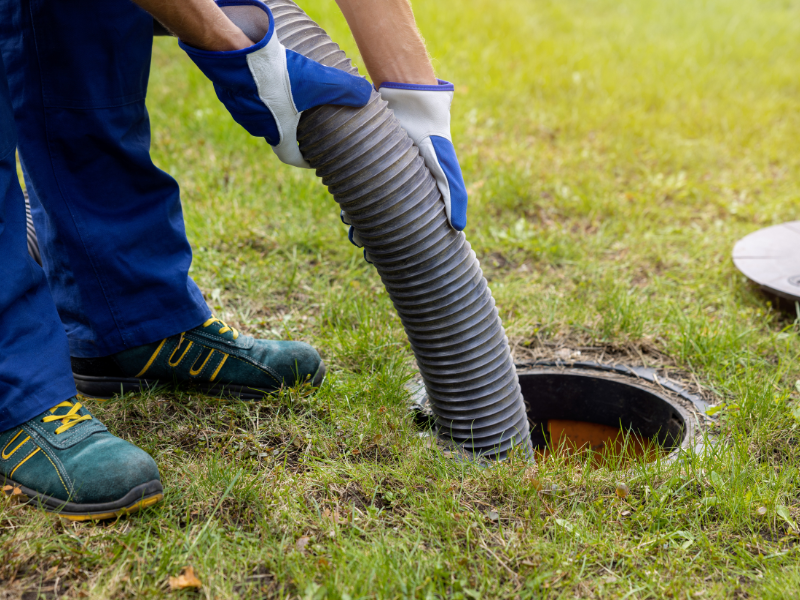
Septic tank pumping involves removing accumulated sludge and floating solids from the tank.
A professional uses specialized equipment to access the tank and remove its contents.
Pumping is important because solids naturally accumulate over time.
If the tank is not properly maintained, excessive solids may interfere with normal operation and potentially affect downstream components.
Pumping frequency should be based on the property’s actual needs rather than a one-size-fits-all schedule.
What Is a Septic Inspection?
A septic inspection evaluates the condition and operation of the septic system.
The inspection may include examining:
- Tank condition
- Inlet and outlet components
- Baffles
- Liquid levels
- Pumps
- Alarms
- Distribution components
- Drain field conditions
The exact inspection process depends on the type and design of the system.
Septic inspections can be particularly valuable before purchasing a property because many septic components are underground and cannot be evaluated through a simple visual inspection of the home.
Septic Systems for Commercial Properties
Residential septic systems are not the only systems that require maintenance.
Commercial properties may have larger or more complex wastewater systems.
Examples include:
- Restaurants
- Hotels
- Commercial buildings
- Facilities outside municipal sewer service
- Properties with significant wastewater volumes
Commercial septic systems may also include:
- Larger septic tanks
- Pumps
- Lift stations
- Grease traps
- Grease interceptors
- Specialized distribution systems
Commercial properties should follow maintenance schedules appropriate for their wastewater volume and system design.
Restaurants and Septic Systems
Restaurants can place significant demands on wastewater systems.
Food-service properties may generate:
- High wastewater volumes
- Grease
- Food particles
- Fats and oils
- Cleaning wastewater
Grease management is particularly important because excessive grease entering a septic or drain system can create serious blockages and maintenance problems.
Restaurants with septic systems may require coordinated services such as:
- Commercial septic pumping
- Grease trap pumping
- Grease interceptor services
- Drain cleaning
- Lift station maintenance
- Septic inspections
A commercial plumbing professional can help determine an appropriate maintenance approach.
How Long Does a Septic System Last?
There is no guaranteed lifespan for every septic system.
Service life depends on factors including:
- System design
- Installation quality
- Soil conditions
- Household usage
- Maintenance
- Tank material
- Drain field condition
- Water usage
- System loading
Proper maintenance can help identify problems early, but it cannot prevent every type of failure.
A system that has been properly maintained may perform differently from one that has experienced years of neglect.
Septic Maintenance When Buying or Selling a Home
A septic inspection can be an important part of evaluating a property that uses onsite wastewater treatment.
Before purchasing a home, buyers may want to understand:
- Where the septic tank is located
- Where the drain field is located
- Tank size
- System type
- Pumping history
- Inspection history
- Previous repairs
- Drain field condition
- Age of the system
- Maintenance requirements
Documentation can make it easier to understand the system’s history and identify potential concerns.
South Florida Septic Tank Maintenance
Properties throughout South Florida can have different wastewater and plumbing configurations depending on location, property type, development history, and available sewer infrastructure.
Flow Pros Plumbing provides septic and plumbing services throughout Miami-Dade and Broward County, including areas such as Homestead, Florida City, Kendall, West Kendall, Miami, Doral, Hialeah, Miami Gardens, Coral Gables, Pinecrest, Cutler Bay, Palmetto Bay, Pembroke Pines, Miramar, Davie, Fort Lauderdale, Weston, Coral Springs, and surrounding communities.
Our septic services include:
- Septic tank pumping
- Septic tank cleaning
- Septic inspections
- Septic repairs
- Septic tank installation
- Septic tank replacement
- Septic troubleshooting
- Septic maintenance
- Drain field inspections
- Drain field repair
- Drain field replacement
- Drain field restoration
- Septic pump replacement
- Lift station repair
- Septic alarm troubleshooting
- Baffle replacement
- Distribution box repair
- Septic line repair
- Commercial septic pumping
- Restaurant septic systems
- Grease trap pumping
- Lift station maintenance
Because every septic system is different, the appropriate maintenance schedule and repair strategy should be based on the actual system and property.
When Should You Call a Septic Professional?
Don’t wait for a complete septic failure.
Contact a professional if you notice:
- Multiple slow drains
- Frequent toilet backups
- Sewage odors
- Standing wastewater
- Wet areas around the drain field
- Septic alarm activation
- Gurgling drains
- Unexplained drainage problems
- Repeated septic issues
- An older system with no maintenance history
Professional diagnosis can help determine whether the problem involves the tank, drain field, pump, distribution system, plumbing lines, or another component.
Need Septic Tank Maintenance in South Florida?
A septic problem rarely becomes easier—or less expensive—when it is ignored.
Whether you need septic tank pumping, septic inspection, septic repair, drain field service, septic maintenance, pump replacement, or commercial septic services, Flow Pros Plumbing can help evaluate your system and determine the appropriate next step.
We provide septic and plumbing services throughout Miami-Dade and Broward County, including Homestead, Florida City, Kendall, West Kendall, Miami, Coral Gables, Pinecrest, Cutler Bay, Palmetto Bay, Doral, Hialeah, Miami Gardens, Pembroke Pines, Miramar, Davie, Fort Lauderdale, Weston, Coral Springs, and surrounding South Florida communities.
Call Flow Pros Plumbing today at 786-857-1560 or 954-993-3020 to schedule a septic inspection, maintenance service, or repair.
If you’re dealing with an active plumbing or wastewater emergency, 24/7 emergency plumbing service is available to help address urgent problems as quickly as possible.
Flow Pros Plumbing — Licensed & Insured Plumbing Services for Miami-Dade and Broward County.
FAQ
Find Out Answers Here
There is no universal pumping schedule for every property. The appropriate frequency depends on tank size, household size, water usage, system design, and solids accumulation.
Solids can continue accumulating and eventually reduce the tank’s effective capacity. In some situations, excessive solids can move toward downstream components and contribute to system problems.
Slow drains, sewage odors, backups, and standing wastewater can indicate a septic problem, but they do not necessarily prove that the tank simply needs pumping.
Excessive wastewater can place additional loading on a septic system and drain field.
Avoid flushing wipes, paper towels, feminine hygiene products, diapers, cat litter, chemicals, grease, and other inappropriate materials.
Toilets should generally be limited to human waste and toilet paper.
Standing water, sewage odors, unusually lush vegetation, slow drainage, and wastewater surfacing near the drain field can indicate a problem.
Professional inspection is needed to determine the cause.