Backflow Prevention: Why Your Property Needs Backflow Testing
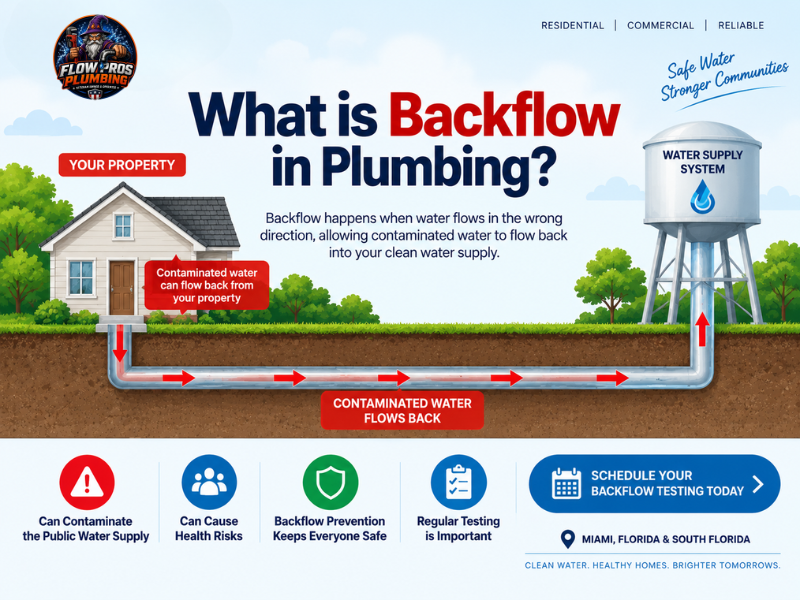
Clean, safe water depends on more than the plumbing fixtures inside your property. Your plumbing system must also prevent contaminated or non-potable water from flowing backward into the clean water supply.
This is where backflow prevention becomes important.
Backflow occurs when water or another substance from a property’s plumbing system moves in the wrong direction and potentially enters the potable water supply. Depending on the source, that water could contain chemicals, fertilizers, wastewater, bacteria, or other contaminants.
A properly installed and maintained backflow prevention device helps protect the potable water system by preventing unwanted reverse flow.
For homeowners, commercial property owners, restaurants, property managers, and other businesses in South Florida, understanding backflow testing and prevention can help protect both the plumbing system and the water supply.
What Is Backflow?
Normally, water flows in one direction—from the water supply into your property.
Backflow occurs when that flow reverses.
Backpressure
Backpressure occurs when pressure within a property’s plumbing system becomes greater than the pressure in the potable water supply.
This pressure difference can potentially force water backward.
Backsiphonage
Backsiphonage occurs when the pressure in the potable water supply drops, creating a suction effect that can pull water from another connected source back toward the potable system.
Both conditions can create a potential contamination pathway.
Why Is Backflow Prevention Important?
The primary purpose of backflow prevention is to protect potable water from potential contamination.
A plumbing system can contain many substances that should never enter a drinking water supply.
For example:
- Irrigation water
- Fertilizers
- Pesticides
- Chemicals
- Pool water
- Cleaning solutions
- Wastewater
- Industrial fluids
- Other non-potable water
Without appropriate protection, a cross-connection can create a pathway for these substances to enter the potable water system.
Backflow prevention devices are designed to help prevent that from happening.
What Is a Cross-Connection?
A cross-connection is a connection between a potable water supply and another water source or substance that may not be safe for consumption.
Cross-connections can occur in residential, commercial, industrial, and institutional plumbing systems.
Examples may include:
- Irrigation systems
- Swimming pools
- Boilers
- Commercial equipment
- Hose connections
- Chemical systems
- Fire protection systems
- Industrial processes
Some cross-connections are obvious, while others may be hidden within complex plumbing systems.
This is why professional inspection and appropriate backflow protection are important.
7 Situations Where Backflow Protection May Be Important
1. Irrigation Systems
Landscape irrigation systems can present a potential cross-connection because water may come into contact with:
- Fertilizers
- Pesticides
- Soil
- Lawn treatments
- Other substances
Appropriate backflow protection helps prevent irrigation water from flowing back into the potable supply.
2. Swimming Pools
Pool plumbing can also create a potential cross-connection.
Pool water is not potable water and can contain chemicals and other contaminants.
Appropriate backflow protection helps separate the potable water system from potentially contaminated water.
3. Commercial Properties
Commercial plumbing systems can be considerably more complex than residential systems.
Businesses may have:
- Multiple water sources
- Specialized equipment
- Boilers
- Irrigation systems
- Commercial kitchens
- Chemical systems
- Process water
- Multiple plumbing connections
The more complex the plumbing system, the more important it is to identify potential cross-connections and provide appropriate protection.
4. Restaurants
Restaurants have several plumbing systems and equipment that may require careful consideration for backflow protection.
Potential areas include:
- Commercial kitchens
- Dishwashing equipment
- Mop sinks
- Food-service equipment
- Grease-related plumbing
- Hose connections
- Water treatment equipment
Restaurants should work with qualified plumbing professionals to ensure their plumbing systems have appropriate backflow protection.
5. Medical and Healthcare Facilities
Healthcare facilities can contain complex plumbing systems and specialized equipment.
Because of the potential consequences associated with contaminated water, appropriate backflow prevention is especially important in environments where water systems have specialized connections.
6. Commercial Landscaping
Properties with extensive irrigation systems can have multiple points where potable water connects to irrigation equipment.
Backflow prevention helps protect the potable supply from potential contaminants within the irrigation system.
7. Industrial and Specialized Plumbing Systems
Industrial facilities can have plumbing systems that involve chemicals, process water, equipment, and other non-potable substances.
These systems may require specialized backflow protection based on the level of potential hazard.
A professional plumbing evaluation can help identify the appropriate protection for the application.
What Is a Backflow Prevention Device?
A backflow prevention device is a plumbing component designed to prevent water from flowing backward into a protected potable water supply.
Different applications may require different types of devices.
The appropriate device depends on factors such as:
- Type of plumbing system
- Degree of potential hazard
- Location
- Water pressure
- Cross-connection
- Applicable requirements
- System configuration
Common backflow prevention equipment can include devices such as:
- Reduced pressure principle assemblies
- Double-check valve assemblies
- Pressure vacuum breakers
- Other approved backflow protection devices
A plumber should determine which device is appropriate for the specific installation.
What Is an RPZ Backflow Preventer?
An RPZ, or reduced pressure zone assembly, is a type of backflow prevention device designed for applications where a higher level of protection is required.
RPZ assemblies use multiple check valves and a relief mechanism to help prevent contaminated water from entering the potable supply.
These devices are commonly associated with applications where the potential hazard is significant.
Because RPZ assemblies are safety-critical components, they should be installed, tested, and maintained by qualified professionals.
What Is Backflow Testing?
Backflow testing is the process of checking a backflow prevention device to determine whether it is operating properly.
A qualified tester uses specialized testing equipment to evaluate the device’s performance.
Depending on the device, testing may evaluate:
- Check valve performance
- Pressure differences
- Relief valve operation
- Whether the assembly is functioning within required parameters
The exact testing procedure depends on the type of backflow prevention assembly.
Why Does Backflow Testing Matter?
Installing a backflow preventer is only part of protecting the water supply.
The device must also continue functioning correctly.
Mechanical components can experience:
- Wear
- Corrosion
- Mineral buildup
- Debris
- Internal deterioration
- Damage
- Improper adjustment
Regular testing can identify problems before the device fails to provide the intended protection.
For properties subject to testing requirements, keeping testing records and completing required inspections on schedule is also important.
How Often Does a Backflow Preventer Need Testing?
Testing requirements vary depending on the type of device, property, water system, and applicable local requirements.
Some properties may be required to complete testing on a recurring schedule.
Because requirements can differ, property owners should confirm the applicable requirements with the relevant local authority or water provider and use a qualified backflow professional for testing.
The important point is not to assume that a backflow preventer will work indefinitely without inspection.
Signs Your Backflow Prevention Device May Have a Problem
Backflow devices can develop mechanical or plumbing issues over time.
Possible warning signs include:
- Visible leakage
- Corrosion
- Unusual discharge
- Damaged components
- Pressure problems
- Failed testing
- Frequent repairs
- Water flow abnormalities
Some device failures may not produce obvious symptoms.
That is another reason routine testing can be important.
What Causes Backflow Preventers to Fail?
Several conditions can affect backflow prevention equipment.
Corrosion
Metal components can deteriorate over time.
Mineral Deposits
Mineral buildup can interfere with internal components.
Debris
Dirt and debris can prevent valves from sealing properly.
Wear
Mechanical components can wear over time through normal operation.
Freezing Conditions
In appropriate climates and installations, freezing can damage plumbing components.
Improper Installation
Incorrect installation can affect device performance.
Changes in the Plumbing System
Adding irrigation, equipment, fixtures, or other connections can change the cross-connection risks within a property.
Regular professional inspection can help identify these issues.
Backflow Testing for Commercial Properties
Commercial properties often require more detailed plumbing management because their systems are larger and more complicated.
A commercial property may contain:
- Multiple restrooms
- Commercial kitchens
- Irrigation
- Fire protection systems
- Water heaters
- Boilers
- Process equipment
- Cooling systems
- Specialized fixtures
Property managers and business owners should maintain accurate records of backflow devices and their testing requirements.
A proactive maintenance program can help identify potential problems before they interrupt business operations.
Backflow Prevention for Restaurants
Restaurants deserve particular attention because their plumbing systems can contain multiple potential cross-connections.
Commercial kitchen equipment may include:
- Dishwashers
- Pre-rinse sprayers
- Mop sinks
- Food preparation equipment
- Ice machines
- Water filtration systems
- Hose connections
Restaurants also have other plumbing systems such as grease traps, floor drains, and grease lines.
Proper plumbing design and backflow protection can help keep potable water separated from potential sources of contamination.
Backflow Prevention and Irrigation Systems
Residential and commercial irrigation systems can create cross-connection concerns because irrigation water can come into contact with soil and landscaping chemicals.
A properly selected backflow prevention device helps protect the potable water system.
If you are installing or modifying an irrigation system, the backflow protection should be considered as part of the overall plumbing design.
What Happens During a Professional Backflow Service?
A professional backflow service may involve several steps.
Step 1: Identify the Device
The plumber or qualified tester identifies the backflow prevention assembly and determines its type.
Step 2: Inspect the Assembly
The device is visually inspected for signs of:
- Leakage
- Corrosion
- Damage
- Improper installation
- Other visible problems
Step 3: Perform the Required Test
Specialized equipment is used to test the assembly according to the applicable procedure.
Step 4: Evaluate the Results
The results are compared with the applicable performance requirements.
Step 5: Repair or Replace if Necessary
If the device fails testing, repairs or replacement may be necessary.
Step 6: Document the Service
Where required, testing results should be properly documented and submitted according to applicable procedures.
What Happens If a Backflow Preventer Fails Testing?
A failed test does not necessarily mean that the entire plumbing system needs to be replaced.
The device may have:
- A worn component
- Debris
- Mineral buildup
- A damaged check valve
- Another serviceable issue
Depending on the device and condition, a professional may be able to repair it.
If the assembly is severely damaged, outdated, or otherwise unsuitable, replacement may be recommended.
Backflow Repair vs. Backflow Replacement
Repair May Be Appropriate When:
- The assembly is otherwise suitable
- Internal components can be serviced
- The problem is repairable
- The device can be returned to proper operation
Replacement May Be Appropriate When:
- The assembly is severely damaged
- Repairs are no longer practical
- The device is unsuitable for the application
- The assembly repeatedly fails testing
- Required protection has changed
- The system has been significantly modified
A qualified professional should make this determination based on the actual device and application.
Why Backflow Prevention Matters for Property Managers
Property managers have an additional responsibility because they may oversee multiple buildings, tenants, plumbing systems, and maintenance requirements.
A proactive backflow program can help property managers:
- Track devices
- Schedule testing
- Identify failed equipment
- Coordinate repairs
- Maintain service records
- Reduce unexpected plumbing issues
- Protect the property’s water system
This can be especially important for apartment buildings, condominiums, commercial centers, hotels, restaurants, and other multi-tenant properties.
Backflow Prevention in South Florida
South Florida properties can include a wide variety of residential, commercial, institutional, and industrial plumbing systems.
Flow Pros Plumbing provides backflow testing, backflow prevention, backflow repair, RPZ valve testing, and related plumbing services throughout Miami-Dade and Broward County.
Our service area includes communities such as:
- Miami
- Miami Beach
- Coral Gables
- Pinecrest
- South Miami
- Palmetto Bay
- Cutler Bay
- Homestead
- Kendall
- West Kendall
- Doral
- Hialeah
- Miami Gardens
- Miami Springs
- Virginia Gardens
- Medley
- Sweetwater
- Hialeah Gardens
- Pembroke Pines
- Miramar
- Pembroke Park
- Davie
- Cooper City
- Plantation
- Fort Lauderdale
- Weston
- Southwest Ranches
- Coral Springs
- And surrounding South Florida communities
Because backflow requirements can depend on the property and local authority, property owners should verify the specific testing and certification requirements that apply to their location and plumbing system.
When Should You Schedule Backflow Testing?
Consider scheduling professional backflow testing when:
- Your property has a backflow prevention device
- Your local authority requires recurring testing
- You have installed or modified an irrigation system
- A commercial plumbing system has been changed
- A device has previously failed testing
- You notice leakage or damage
- A property inspection identifies a potential cross-connection
- You are unsure whether your backflow device is functioning correctly
Don’t wait for a failed device to become a larger plumbing problem.
Need Backflow Testing or Repair in South Florida?
Protecting your property’s water supply starts with properly maintained plumbing and appropriate backflow prevention.
If you need backflow testing, backflow repair, RPZ valve testing, backflow prevention, or installation of a backflow prevention device, Flow Pros Plumbing can evaluate your plumbing system and help determine the appropriate service.
We provide residential and commercial plumbing services throughout Miami-Dade and Broward County, including Miami, Miami Beach, Coral Gables, Pinecrest, Kendall, West Kendall, Doral, Hialeah, Homestead, Cutler Bay, Palmetto Bay, Pembroke Pines, Miramar, Davie, Fort Lauderdale, Weston, Coral Springs, and surrounding communities.
Call Flow Pros Plumbing today at 786-857-1560 or 954-993-3020 to schedule professional backflow service or a plumbing inspection.
For businesses, restaurants, property managers, and commercial properties, we can also assist with commercial plumbing maintenance, backflow services, water line services, commercial drain and sewer services, and plumbing repairs.
Flow Pros Plumbing — Licensed & Insured Plumbing Services for Miami-Dade and Broward County.
FAQ
Find Out Answers Here
Backflow testing checks whether a backflow prevention assembly is functioning correctly and providing the intended protection against reverse water flow.
Testing requirements depend on the type of property, backflow device, plumbing system, and applicable local regulations. Property owners should verify the requirements that apply to their specific location.
An RPZ, or reduced pressure zone assembly, is a type of backflow prevention device designed to provide a high level of protection against potential contamination of potable water.
The required frequency varies by location, device, and application. If your property is subject to testing requirements, follow the schedule established by the applicable authority.
A failed device may be repairable, depending on the cause and condition. In other cases, replacement may be necessary. A qualified professional can evaluate the assembly and recommend the appropriate solution.
Yes. Leakage can occur because of worn components, debris, corrosion, pressure conditions, or other problems. A leaking assembly should be inspected.
Some residential properties may require or benefit from backflow protection depending on their plumbing configuration and potential cross-connections, such as irrigation systems. Requirements vary by location and application.
Commercial food-service properties can have multiple potential cross-connections and may require specific backflow protection. The appropriate equipment depends on the plumbing system and applicable requirements.