Whole-Home Water Filtration vs. Water Softeners: What's the Difference?
The water entering your home may look clean, but that does not mean it contains exactly what you want in your household water.
Homeowners often consider whole-home water filtration systems and water softeners when they want to improve water quality, reduce mineral-related problems, or protect plumbing fixtures and appliances.
However, these systems do different jobs.
A water softener is primarily designed to address hardness minerals, while a water filtration system is designed to reduce specific contaminants or substances depending on the filter technology being used.
Choosing the right system starts with understanding the difference.
For homeowners throughout Miami-Dade and Broward County, a professional plumbing evaluation can help determine which water treatment option—or combination of options—makes sense for the property.
What Is a Whole-Home Water Filtration System?
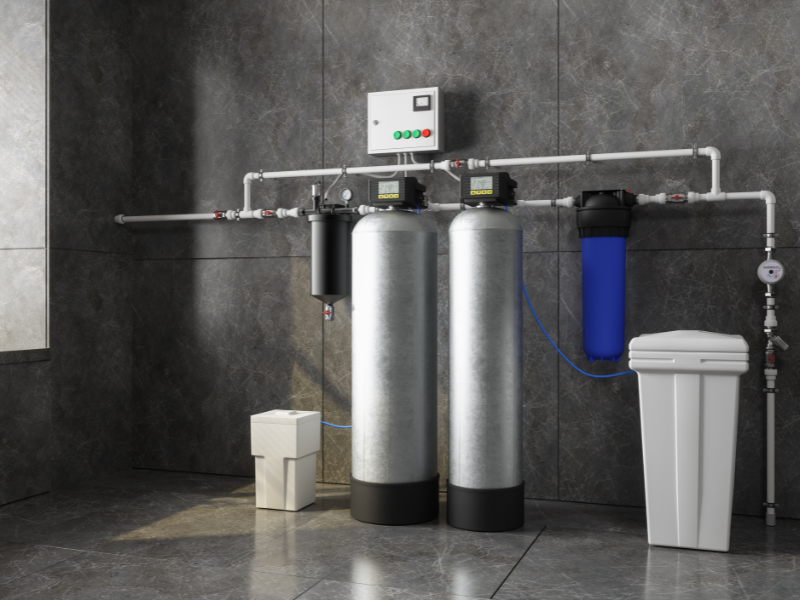
A whole-home water filtration system treats water as it enters the house so that filtered water can be distributed throughout the plumbing system.
Unlike a small filter attached to one faucet, a whole-home system is installed at a point where it can treat water serving multiple fixtures.
Depending on the filtration technology, a system may be designed to reduce certain substances such as:
- Sediment
- Chlorine
- Certain chemicals
- Unpleasant tastes or odors
- Specific contaminants
The exact substances removed depend on the type of filter and its specifications.
This is important because not every water filter removes the same things.
Homeowners should choose a filtration system based on the actual water-quality concern rather than assuming that one filter can remove everything.
What Is a Water Softener?
A water softener is designed primarily to address hard water.
Hard water contains elevated levels of minerals, particularly calcium and magnesium.
These minerals are not necessarily a sign that water is unsafe to drink, but they can create household plumbing and maintenance concerns.
Hard water can contribute to:
- Mineral deposits
- Scale buildup
- Spots on fixtures
- Reduced efficiency of some water-using equipment
- Soap and detergent performance issues
- Buildup on showerheads and faucets
A traditional water softener commonly uses an ion-exchange process to reduce calcium and magnesium hardness from the water.
Water Filtration vs. Water Softening: The Key Difference
The simplest way to understand the difference is:
A water softener addresses hardness. A water filtration system addresses specific substances or contaminants targeted by the filter.
They are not interchangeable.
For example, installing a water softener does not automatically mean that the water has been filtered for every contaminant.
Likewise, installing a standard whole-home filter does not necessarily remove hardness minerals.
The appropriate system depends on what you are trying to address.
8 Signs You May Benefit From a Water Treatment System
1. You Notice White Mineral Deposits
White or chalky deposits around faucets, showerheads, sinks, and other fixtures may be associated with hard water.
Minerals can accumulate when water repeatedly evaporates from surfaces.
If buildup is widespread throughout the home, a water-softening solution may be worth evaluating.
2. Your Showerhead Keeps Developing Scale
Mineral deposits can accumulate inside and around showerheads.
You may notice:
- Reduced spray performance
- Blocked openings
- White deposits
- More frequent cleaning
Hard water is one potential cause.
A water treatment evaluation can help determine whether hardness is contributing to the problem.
3. Your Faucets Develop Spots
Water spots on sinks, faucets, glass shower doors, and other surfaces can be frustrating.
Hard water minerals can leave deposits after water evaporates.
While regular cleaning can remove existing deposits, addressing the underlying water condition may reduce recurring buildup.
4. Soap Doesn’t Perform the Way You Expect
Hard water can affect how soaps and detergents interact with water.
Some homeowners notice:
- Less lather
- Soap residue
- Difficulty rinsing
- Mineral deposits on bathroom surfaces
A water softener can help address hardness-related issues.
5. You Notice an Unpleasant Taste or Odor
Unusual taste or odor can have many possible causes.
Depending on the source, a properly selected filtration system may help reduce certain substances responsible for taste or odor.
However, homeowners should identify the underlying water-quality concern before choosing a filter.
If the water suddenly changes in appearance, taste, or smell, the source should be investigated rather than simply installing a filter.
6. You Want Filtered Water Throughout the House
A countertop or under-sink filter only treats water at a particular point.
A whole-home filtration system is different because it can treat water entering the property’s plumbing system.
This can provide filtered water to multiple fixtures, depending on the system’s design.
Whole-home filtration may be considered for:
- Kitchen faucets
- Bathroom sinks
- Showers
- Bathtubs
- Laundry
- Other household fixtures
7. You Are Concerned About Scale on Plumbing Equipment
Mineral buildup can occur inside plumbing components and water-using equipment.
Depending on the system and water conditions, scale may affect:
- Water heaters
- Faucets
- Showerheads
- Valves
- Appliances
- Plumbing components
Reducing hardness can help manage scale-related problems.
However, water treatment should be selected based on actual water conditions and equipment requirements.
8. You Want a More Comprehensive Water Treatment Setup
Some homeowners may benefit from combining treatment technologies.
For example, a property may have both:
- Hard water
- A separate concern related to taste, odor, sediment, or another substance
In that situation, a water softener and filtration system may address different aspects of the water.
A professional can help determine whether multiple treatment stages are appropriate.
What Does a Water Softener Remove?
A traditional ion-exchange water softener is primarily designed to reduce hardness minerals such as:
- Calcium
- Magnesium
It is important to understand what a softener does not necessarily do.
A conventional water softener is not automatically a complete drinking-water filtration system.
It should not be assumed to remove every:
- Chemical
- Sediment
- Microorganism
- Contaminant
- Taste or odor compound
The capabilities of any treatment system depend on its design and certification.
What Does a Whole-Home Water Filter Remove?
There is no single answer because “whole-home water filter” describes a category rather than one specific technology.
Different filtration systems use different media and technologies.
Depending on the system, filtration may target substances such as:
- Sediment
- Chlorine
- Certain organic compounds
- Specific chemicals
- Certain metals
- Taste and odor compounds
The filter must be selected according to the water-quality issue it is intended to address.
Always check the manufacturer’s specifications and certifications for the specific system.
Do You Need a Water Softener or a Water Filter?
The answer depends on your home’s water.
A Water Softener May Be Appropriate If:
- You have hard water
- You see recurring mineral scale
- Faucets develop mineral deposits
- Showerheads accumulate scale
- You experience hardness-related soap problems
A Whole-Home Water Filter May Be Appropriate If:
- You want to reduce specific substances
- You have taste or odor concerns
- You want filtered water at multiple fixtures
- You have sediment concerns
- Water testing identifies a substance that a particular filter is designed to reduce
You May Need Both If:
Your home has both hardness and a separate water-quality concern.
A combined treatment setup can use different technologies for different purposes.
How Do You Know If You Have Hard Water?
Several household symptoms can suggest hard water.
You may notice:
- White deposits around faucets
- Scale on showerheads
- Spots on dishes
- Mineral buildup
- Soap residue
- Reduced performance of certain water-using equipment
However, household symptoms do not provide a complete measurement of water hardness.
Water testing can provide more useful information when selecting a treatment system.
Should You Test Your Water Before Installing a Filter?
In many cases, yes.
Testing can help you understand what is actually present in your water before purchasing treatment equipment.
Testing may evaluate characteristics such as:
- Hardness
- pH
- Certain minerals
- Chlorine
- Other substances depending on the test
The appropriate testing depends on the concern.
For example, someone concerned about hard water needs different information from someone concerned about a particular contaminant.
Testing helps prevent homeowners from buying a treatment system that does not address their actual concern.
Where Is a Whole-Home Water Filtration System Installed?
Whole-home systems are generally installed at or near the point where water enters the property so the treatment system can serve the home’s plumbing.
The exact location depends on:
- Main water line configuration
- Available space
- Existing plumbing
- Water treatment equipment
- Drainage requirements
- Electrical requirements, where applicable
- System design
A professional plumber can evaluate the property and determine an appropriate installation location.
Where Is a Water Softener Installed?
A water softener is typically installed near the home’s incoming water supply and requires the appropriate plumbing connections.
Depending on the system, installation may also require:
- A drain connection
- Electrical power
- Brine tank space
- Bypass plumbing
- Appropriate clearance for maintenance
The installation location should provide adequate access for future service.
Can a Water Softener and Water Filter Be Installed Together?
Yes, in many homes.
A combined water treatment system can be designed to address different water-quality concerns.
For example:
Water filter → Water softener → Home plumbing
The actual order and configuration depend on the equipment and water conditions.
A professional should determine the appropriate setup based on the selected equipment and the home’s plumbing system.
Whole-Home Filtration vs. Under-Sink Filtration
Homeowners often compare these two options.
Under-Sink Filtration
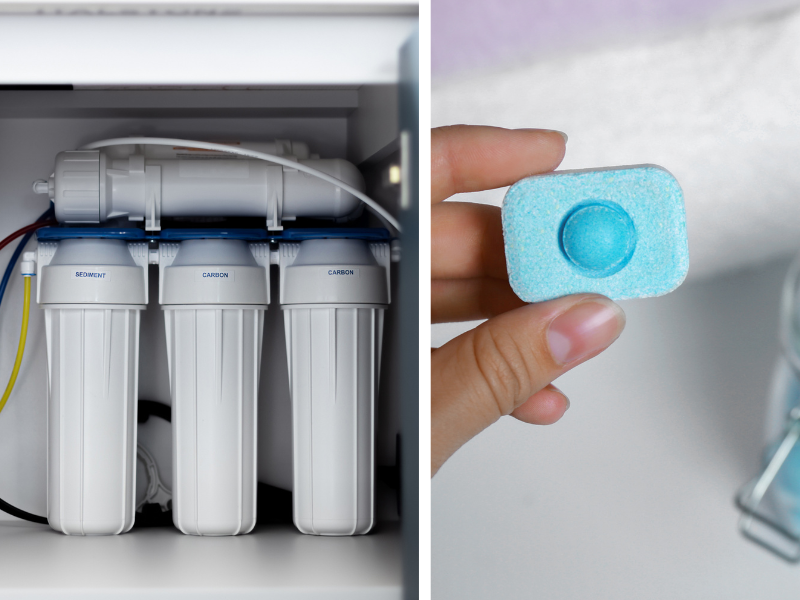
An under-sink system treats water at a specific faucet.
Potential advantages include:
- Lower installation complexity
- Targeted drinking-water treatment
- Less equipment for the overall plumbing system
Whole-Home Filtration
A whole-home system treats water before it reaches multiple fixtures.
Potential advantages include:
- Treatment throughout the home
- Filtered water at multiple fixtures
- Centralized treatment
- Potentially less reliance on individual point-of-use filters
The right choice depends on the homeowner’s goals and water-quality concerns.
Can Water Filtration Protect Your Plumbing?
Some filtration systems can reduce substances that contribute to certain plumbing or fixture concerns.
For example, reducing sediment can help prevent particles from accumulating in certain plumbing components.
However, water filtration should not be viewed as a replacement for normal plumbing maintenance.
Homeowners should still:
- Repair leaks
- Maintain water heaters
- Monitor water pressure
- Clean fixtures
- Replace filters when required
- Inspect plumbing components
- Address problems promptly
Can a Water Softener Protect a Water Heater?
Hard water can contribute to mineral scale inside water-heating equipment.
Reducing hardness may help manage scale-related buildup, depending on the equipment and water conditions.
However, a water softener does not eliminate the need for water heater maintenance.
Water heaters may still require services such as:
- Flushing
- Inspection
- Temperature and pressure relief valve evaluation
- Expansion tank service
- Anode rod inspection, where applicable
- Other manufacturer-recommended maintenance
How Often Do Water Filters Need to Be Replaced?
There is no universal replacement interval.
It depends on:
- Filter type
- Water quality
- Household water usage
- System capacity
- Manufacturer recommendations
- Amount of material being removed
A filter that is not replaced when required can lose effectiveness and may restrict water flow.
Homeowners should follow the manufacturer’s recommended replacement schedule and monitor system performance.
How Often Does a Water Softener Need Maintenance?
Water softener maintenance depends on the system design.
Homeowners may need to monitor:
- Salt levels
- System settings
- Brine tank condition
- Regeneration
- Water quality
- Mechanical components
Some systems may require periodic professional service.
Following the manufacturer’s maintenance instructions helps keep the equipment operating properly.
Signs Your Water Treatment System Needs Service
Contact a professional if you notice:
- Reduced water flow
- Water quality changes
- Increasing mineral buildup
- Leaks around the equipment
- Unusual noises
- Salt or brine system problems
- A filter that requires frequent replacement
- Changes in soft water performance
- Equipment that stops operating correctly
A malfunctioning treatment system should be diagnosed rather than simply adjusted without understanding the cause.
Common Water Treatment Installation Mistakes
Choosing the right equipment is only part of the process.
Poor installation can create plumbing problems.
Common issues can include:
- Incorrect pipe sizing
- Improper connections
- Inadequate drainage
- Incorrect bypass configuration
- Poor equipment placement
- Insufficient maintenance access
- Installing a system that does not match the water-quality concern
Professional installation helps ensure the treatment equipment works properly with the home’s existing plumbing.
Water Filtration for South Florida Homes
Water quality and plumbing conditions can vary from one South Florida property to another.
Homes in Miami, Coral Gables, Pinecrest, South Miami, Kendall, West Kendall, Doral, Hialeah, Miami Beach, Homestead, Cutler Bay, Palmetto Bay, Pembroke Pines, Miramar, Davie, Fort Lauderdale, Weston, Coral Springs, and surrounding communities may have different plumbing configurations, water treatment needs, and property conditions.
That is why homeowners should avoid selecting a water treatment system based solely on a generic recommendation.
A professional evaluation can help determine:
- What type of system you have
- Where it should be installed
- What plumbing modifications may be needed
- Whether a filter, softener, or combination makes sense
- How the equipment should be maintained
Water Treatment for Condos, Apartments, and Property Managers
Water treatment is not limited to single-family homes.
Condos, apartments, rental properties, and other residential buildings may have specialized plumbing configurations.
Property managers may need to consider:
- Individual-unit treatment
- Building-wide treatment
- Water pressure
- Equipment access
- Maintenance schedules
- Filter replacement
- Plumbing compatibility
The appropriate approach depends on the building’s plumbing design and ownership structure.
A professional plumbing evaluation can help identify practical options.
Water Filtration for Commercial Properties
Businesses may have different water-quality requirements from residential properties.
Commercial applications can include:
- Restaurants
- Hotels
- Offices
- Medical facilities
- Retail properties
- Schools
- Industrial facilities
Commercial water treatment may be used for applications involving drinking water, food preparation, equipment, or other processes.
The system should be selected according to the property’s water requirements and the equipment involved.
Choosing the Right Water Treatment System
Before purchasing a water filter or softener, consider these questions:
What Problem Are You Trying to Solve?
Are you primarily concerned about:
- Hardness?
- Scale?
- Taste?
- Odor?
- Sediment?
- A specific contaminant?
Have You Tested the Water?
Testing can provide useful information when determining what treatment is appropriate.
What Does the Manufacturer Say the System Removes?
Review the actual specifications and certifications.
How Much Water Does Your Household Use?
System capacity should match the property’s needs.
Where Will the Equipment Be Installed?
There needs to be enough room for installation, service, and maintenance.
What Maintenance Is Required?
Understand filter replacement, salt requirements, regeneration, and professional servicing before choosing a system.
Why Professional Installation Matters
Water treatment equipment becomes part of the home’s plumbing system.
Professional installation helps address:
- Correct connections
- Proper sizing
- Water flow
- Drainage
- Equipment placement
- Shut-off valves
- Bypass configuration
- Maintenance access
A professional plumber can also identify existing plumbing problems that could affect the installation.
Need Water Filtration or Water Softener Installation in South Florida?
If you’re dealing with hard water, mineral buildup, unpleasant taste or odor, sediment concerns, or other water-quality issues, don’t choose a treatment system based on guesswork.
Flow Pros Plumbing provides water filtration system installation, water softener services, whole-home filtration, reverse osmosis systems, and residential plumbing services throughout Miami-Dade and Broward County.
We serve homeowners and properties in Miami, Coral Gables, Pinecrest, South Miami, Kendall, West Kendall, Doral, Hialeah, Miami Beach, Homestead, Cutler Bay, Palmetto Bay, Pembroke Pines, Miramar, Davie, Fort Lauderdale, Weston, Coral Springs, and surrounding South Florida communities.
Call Flow Pros Plumbing today at 786-857-1560 or 954-993-3020 to discuss your water filtration or water softener needs and schedule a professional plumbing evaluation.
Whether you need whole-home water filtration, a water softener, reverse osmosis, water line services, or another plumbing solution, our team can help you understand your options and choose an approach suited to your property’s plumbing system.
Flow Pros Plumbing — Licensed & Insured Plumbing Services for Miami-Dade and Broward County.
FAQ
Find Out Answers Here
No. A water softener is primarily designed to reduce hardness minerals such as calcium and magnesium. A water filter is designed to reduce specific substances depending on its filtration technology.
Not necessarily. It depends on your water quality and what you want the system to accomplish. Some homes may benefit from one system, while others may need multiple treatment stages.
A conventional water softener is not designed primarily to remove chlorine. If chlorine reduction is a goal, a filtration system specifically designed for that purpose may be more appropriate.
A standard water filter does not necessarily remove hardness minerals. A water softener or another treatment technology specifically designed for hardness may be needed.
Mineral deposits, scale, water spots, and soap-related problems can suggest hard water. Water testing provides more reliable information.
Neither is universally better. Whole-home filtration treats water throughout the plumbing system, while an under-sink system provides treatment at a specific point. The best option depends on your goals and water-quality concerns.
The replacement interval depends on the filter type, water quality, household usage, and manufacturer recommendations. Follow the specifications for the specific system.
Yes. A professional plumber can evaluate the home’s plumbing configuration, install the appropriate equipment, and connect the treatment system to the water supply.
Reducing water hardness can help reduce mineral scale associated with calcium and magnesium. However, results depend on the water conditions and treatment system.