5 Signs Your Main Water Shut-Off Valve Needs to Be Replaced
Your home’s main water shut-off valve is one of the most important plumbing components in the property.
It controls the incoming water supply to your home and allows you to stop the flow of water when there is a major plumbing problem. If a pipe bursts, a water line fails, or a serious leak develops, being able to shut off the water quickly can help limit water damage.
But what happens when the shut-off valve itself does not work properly?
A valve that is difficult to turn, leaking, corroded, or unable to completely stop the water supply may need professional attention. In some cases, main water shut-off valve replacement is the safest long-term solution.
For homeowners in South Florida, knowing the warning signs of a failing shut-off valve can help prevent a plumbing emergency from becoming a much more expensive problem.
What Is a Main Water Shut-Off Valve?
The main water shut-off valve controls the water entering your home from the primary water supply.
When the valve is closed, it is designed to stop or significantly restrict water from entering the property’s plumbing system.
The location varies depending on the home’s construction and plumbing configuration. It may be located:
- Near where the main water line enters the home
- In a garage
- Near an exterior wall
- In a utility area
- In a mechanical room
- Near the water meter
- In another accessible plumbing area
If you are unsure where your main shut-off valve is located, it is worth identifying it before an emergency happens.
Why Is the Main Shut-Off Valve So Important?
Imagine a water supply pipe suddenly bursts inside your home.
Water may continue flowing until the supply is shut off.
If the main shut-off valve works correctly, you can quickly stop the incoming water while waiting for professional plumbing assistance.
A functioning valve can be particularly important during:
- Burst pipe emergencies
- Major plumbing leaks
- Water line failures
- Appliance supply line failures
- Plumbing repairs
- Water damage emergencies
A valve that cannot be operated when you need it can delay your response during a critical situation.
5 Signs Your Main Water Shut-Off Valve Needs Replacement
1. The Valve Is Difficult to Turn
One of the most obvious warning signs is a valve that is extremely difficult to operate.
A valve may become stiff because of:
- Age
- Corrosion
- Mineral buildup
- Internal deterioration
- Long periods without being operated
- Mechanical wear
A valve should not require excessive force to operate.
Trying to force a severely stuck valve can damage the valve or surrounding plumbing.
If your main shut-off valve is difficult to operate, have a plumber inspect it rather than attempting to force it.
2. The Valve Is Leaking
A shut-off valve should not continuously leak around its handle, body, or connections.
You may notice:
- Dripping water
- Moisture around the valve
- Corrosion
- Water stains
- Mineral deposits
- A wet area around the connection
Even a small leak deserves attention.
A leaking valve may sometimes be repaired depending on the valve type and condition. In other cases, replacement may be the more appropriate solution.
A plumber can determine whether the valve can be repaired or should be replaced.
3. The Valve Does Not Completely Stop the Water
This is one of the most important warning signs.
If you close the main shut-off valve and water continues flowing through your home’s plumbing fixtures, the valve may not be functioning correctly.
A partially functioning valve can create problems during an emergency because you may believe the water is shut off when it is not.
There can be several reasons why water continues flowing, including:
- Internal valve failure
- A damaged valve
- Incorrect valve operation
- Another water source
- Plumbing configuration issues
A professional plumber can determine why the water is not shutting off completely.
4. You See Significant Corrosion
Visible corrosion around the valve can indicate deterioration.
Signs may include:
- Rust
- Greenish deposits on copper connections
- Flaking material
- Mineral buildup
- Corroded fittings
- Deteriorated valve surfaces
Some surface discoloration may not mean that the valve has completely failed.
However, significant corrosion should not be ignored, particularly when the valve is old or difficult to operate.
A plumber can inspect the valve and surrounding connections to determine whether replacement is appropriate.
5. The Valve Is Old or Has Not Been Used in Years
A valve can remain untouched for a very long time.
Homeowners often discover that their shut-off valve is difficult to operate only when they actually need it.
A valve that has not been operated or inspected for years may have:
- Corroded components
- Stiff internal parts
- Worn seals
- Deteriorated connections
- Mechanical problems
This does not mean every old valve must immediately be replaced.
However, homeowners should know whether their valve works before a plumbing emergency occurs.
Different Types of Main Shut-Off Valves
Not every home uses the same valve design.
Common types include:
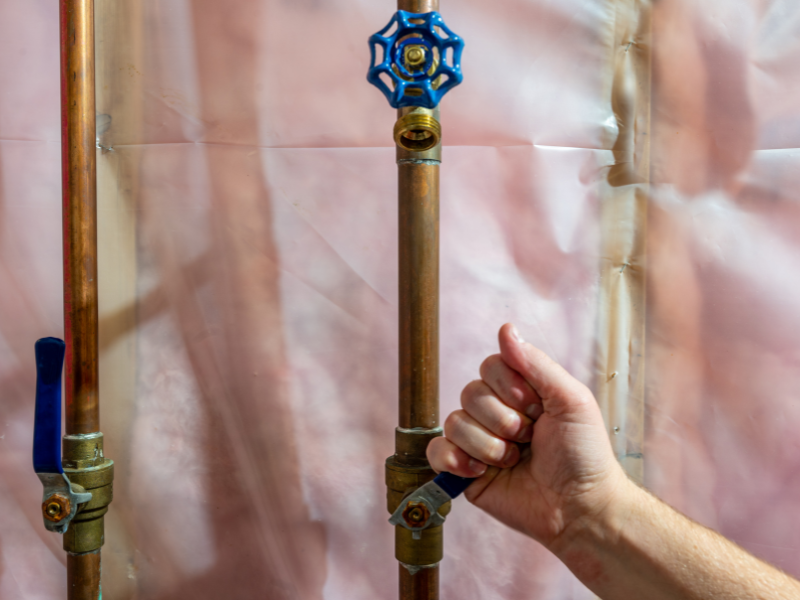
Ball Valves
Ball valves use a handle that typically turns a quarter turn between open and closed positions.
They are commonly used in modern plumbing systems and can provide straightforward operation.
Gate Valves
Gate valves typically use a round wheel that turns to open or close the valve.
Older properties may have gate valves installed as part of their plumbing systems.
Over time, these valves can become difficult to operate or may fail internally.
Globe Valves
Globe valves use an internal mechanism designed to control water flow.
They may be found in certain plumbing applications but are generally less common as a residential main shut-off than ball or gate valves.
The appropriate replacement depends on the home’s plumbing configuration and applicable requirements.
How to Test Your Main Water Shut-Off Valve
Homeowners should know where their main shut-off valve is located and understand how it operates.
However, don’t force a valve that is stuck or heavily corroded.
If the valve appears to be in reasonable condition, you can have a plumbing professional verify that it operates correctly during a plumbing inspection.
The important thing is to avoid waiting until a pipe bursts to discover that the valve does not work.
If you are unsure about your valve’s condition, a plumber can inspect it and recommend whether maintenance, repair, or replacement is appropriate.
What Should You Do If Your Main Shut-Off Valve Is Stuck?
Do not apply excessive force.
Trying to force a stuck valve can cause additional damage and potentially create a leak.
Instead:
- Stop using unnecessary water.
- Avoid forcing the valve.
- Identify whether there is an active plumbing leak.
- Contact a professional plumber.
- If there is a major leak and you can safely access another appropriate shut-off point, use it if possible.
In some situations, the water may need to be shut off at the meter or another upstream valve.
If you are unsure which valve controls the property, a professional plumber can help identify the appropriate shut-off location.
Can a Main Shut-Off Valve Be Repaired?
Sometimes.
Whether repair is practical depends on:
- Valve type
- Age
- Condition
- Location
- Cause of the problem
- Condition of surrounding plumbing
For example, a minor issue involving a valve component may have a different solution from a severely corroded or internally damaged valve.
A professional plumber should inspect the valve before determining whether repair or replacement is appropriate.
When Is Main Water Shut-Off Valve Replacement Necessary?
Replacement may be recommended when the valve:
- Cannot be operated
- Does not completely stop water flow
- Has significant corrosion
- Is leaking
- Has internal damage
- Has deteriorated connections
- Has repeatedly failed
- Is no longer reliable
Replacing a failing valve before an emergency can provide homeowners with greater confidence that they can shut off their water when necessary.
What Happens During Shut-Off Valve Replacement?
The exact process depends on where the valve is located and how the home’s plumbing system is configured.
A typical professional replacement may involve:
1. Inspecting the Existing Valve
The plumber identifies the valve type and determines how it connects to the home’s water supply.
2. Shutting Off the Water Supply
The appropriate upstream water supply must be shut off before removing the existing valve.
3. Removing the Old Valve
The plumber removes the damaged or deteriorated valve using the appropriate method for the existing plumbing.
4. Preparing the Connection
The surrounding pipe and connection points are prepared for the new valve.
5. Installing the Replacement
A properly sized and approved replacement valve is installed.
6. Restoring Water Service
The water supply is gradually restored.
7. Testing for Leaks
The new valve and surrounding connections are checked to make sure they are operating properly and are not leaking.
How Often Should a Main Shut-Off Valve Be Checked?
There is no universal replacement schedule for every home’s shut-off valve.
The condition of the valve matters more than simply its age.
However, homeowners should periodically make sure they know:
- Where the valve is located
- What type of valve they have
- Whether it can be operated
- Whether it fully stops water flow
- Whether there are signs of corrosion or leakage
Homes with older plumbing or valves may benefit from a professional plumbing inspection.
Main Shut-Off Valve vs. Individual Fixture Shut-Off Valves
Your home may have several different types of shut-off valves.
Main Shut-Off Valve
The main valve controls the water supply to the property or major portions of the home.
Fixture Shut-Off Valve
These smaller valves control individual fixtures.
Examples include valves supplying:
- Toilets
- Bathroom sinks
- Kitchen sinks
- Washing machines
- Water heaters
If a toilet supply line leaks, you may only need to shut off the toilet’s individual valve.
But if a major pipe bursts or there is a significant leak elsewhere in the home, the main shut-off valve may be necessary.
What About the Water Meter Shut-Off Valve?
Some properties have a shut-off valve near the water meter.
The exact arrangement varies by property and water utility.
Homeowners should not assume that every valve near a meter is intended for routine homeowner operation.
If you are unsure which valve controls your property or whether a valve can be operated safely, contact a plumbing professional or the appropriate water utility for guidance.
Why South Florida Homeowners Should Pay Attention to Shut-Off Valves
South Florida homes range from older properties with aging plumbing systems to newer homes with modern plumbing installations.
Properties throughout Miami, Coral Gables, Pinecrest, Kendall, West Kendall, Doral, Hialeah, Miami Beach, Homestead, Cutler Bay, Palmetto Bay, Pembroke Pines, Miramar, Davie, Fort Lauderdale, Weston, Coral Springs, and surrounding communities can have different plumbing configurations.
A main shut-off valve that has been ignored for years may not perform properly when an emergency occurs.
Checking the valve before a problem happens can help homeowners understand whether it is ready to perform its most important job: stopping the water supply when necessary.
What to Do During a Major Plumbing Emergency
If a pipe suddenly bursts or a major water leak develops, acting quickly can reduce ongoing water loss.
Step 1: Shut Off the Water
If the main shut-off valve is accessible and can be operated safely, shut off the water.
Step 2: Stop Using Water
Avoid running additional fixtures or appliances.
Step 3: Protect Electrical Equipment
If water is near electrical outlets, appliances, or electrical equipment, avoid contact with the water and seek appropriate professional assistance.
Step 4: Reduce Potential Damage
Move belongings away from affected areas if it is safe to do so.
Step 5: Call a Professional Plumber
A plumbing professional can identify the source of the problem and determine the appropriate repair.
For major plumbing emergencies, professional assistance should be requested as quickly as possible.
Why Professional Shut-Off Valve Replacement Matters
A main water shut-off valve is directly connected to the home’s primary water supply.
Replacing it is not the same as changing a faucet handle or other simple fixture component.
The plumber must consider:
- Water supply configuration
- Existing pipe material
- Valve size
- Connection type
- Accessibility
- Local plumbing requirements
- Condition of surrounding piping
An improperly installed valve can create leaks or fail when it is needed.
Professional installation helps ensure that the replacement valve is correctly integrated into the existing plumbing system.
Other Plumbing Problems to Check at the Same Time
If your main shut-off valve is old or deteriorated, it may be worth having the surrounding plumbing evaluated as well.
A plumber can check for:
- Corroded pipes
- Water leaks
- Damaged fittings
- Aging water lines
- Low water pressure
- High water pressure
- Deteriorated connections
- Main water line problems
If the valve is failing because the surrounding plumbing is also severely deteriorated, addressing the larger problem may be more practical than replacing the valve alone.
Need Main Water Shut-Off Valve Replacement in South Florida?
Don’t wait until a burst pipe or major plumbing leak reveals that your home’s main shut-off valve no longer works.
If your valve is stuck, leaking, corroded, difficult to operate, or unable to completely stop the water, Flow Pros Plumbing can inspect the valve and help
FAQ
Find Out Answers Here
Its location varies by home. It may be near where the water line enters the property, in a garage, utility room, mechanical area, or near the water meter. A plumber can help identify the correct valve if you are unsure.
Difficulty turning the valve, leakage, corrosion, or water continuing to flow after the valve is closed can indicate a problem. Professional inspection can determine whether it needs repair or replacement.
A stuck valve should be professionally inspected. Replacement may be recommended if the valve is severely deteriorated or cannot reliably control the water supply.
Because the main valve controls the property’s primary water supply, replacement can require shutting off water upstream and working on the main plumbing connection. Professional installation is recommended to reduce the risk of leaks and improper connections.
There is no single lifespan that applies to every valve. Material, valve type, water conditions, installation quality, age, and maintenance all affect service life.
Yes. A plumber can inspect the valve and determine whether replacement is appropriate based on its condition and the surrounding plumbing.
Do not force a stuck valve. If you have an active leak, contact a professional plumber immediately and determine whether another appropriate shut-off point can safely stop the water.